Hemlock woolly adelgid (HWA) is a small, aphid-like insect from East Asia that feeds on hemlock trees by sucking stored starches from the base of the needles. It spreads fastest in areas with milder winters, which is why coastal and Southern Maine have been hit first.
Left untreated, the results are severe: studies have found that HWA can kill or badly damage more than 95 percent of untreated hemlocks. The good news is that hemlocks respond well to treatment, often resuming healthy twig growth.
How to spot hemlock woolly adelgid
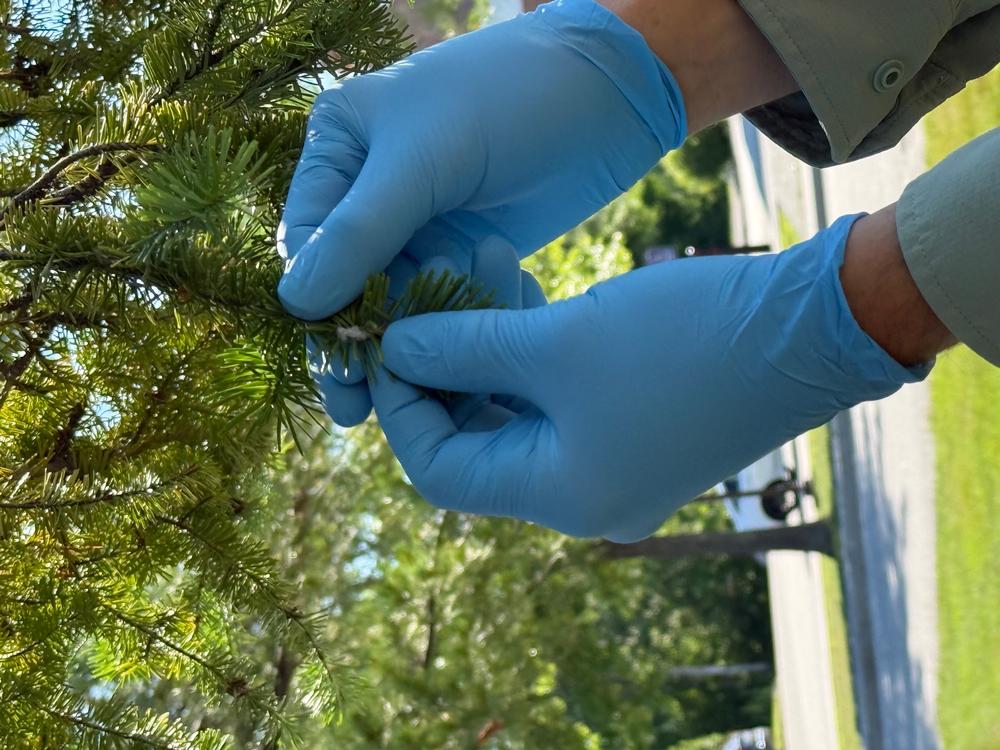
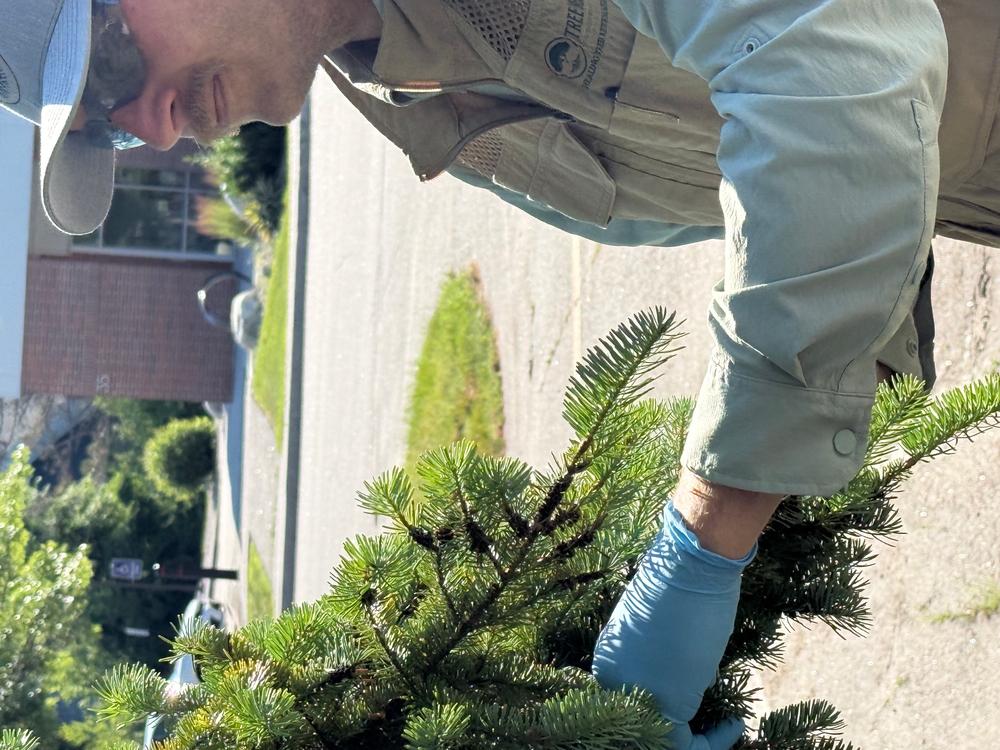
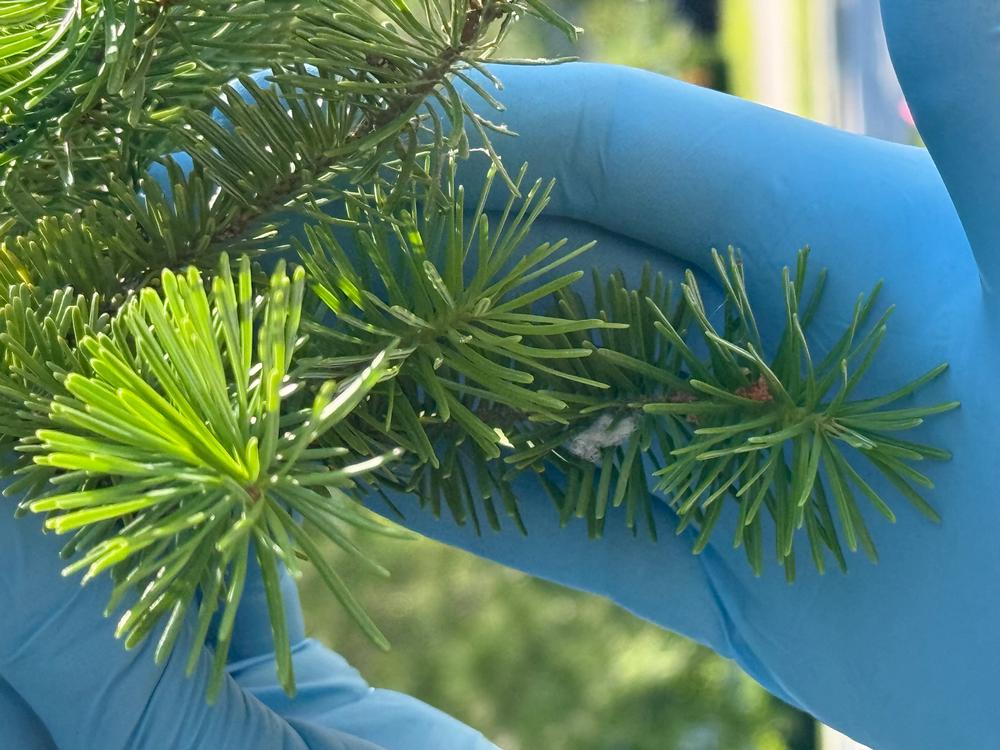
- White, cottony tufts on the underside of branches, right where the needles attach. They are easiest to see from late fall through spring.
- Grayish, dull needles instead of a healthy dark green
- Needle drop and thinning, especially on lower branches
- Little or no new growth at the branch tips in spring
- Dieback that starts low in the tree and moves upward
Spittlebug foam, spider egg sacs and elongate hemlock scale (which often shows up on hemlocks that already have HWA) can all look like HWA at a glance. A proper diagnosis comes first, before any treatment.
Treatment options
There is no one-size-fits-all program for hemlocks. We choose the approach based on the size and condition of your trees, the site and what is nearby:
Why protect your hemlocks?
Hemlocks are one of Maine’s most iconic trees. They shade streams, shelter wildlife through the winter and form dense, evergreen privacy screens that are hard to replace. On many Southern Maine properties, a stand of mature hemlocks took a century to grow. Protecting them now is far easier than replacing them later.