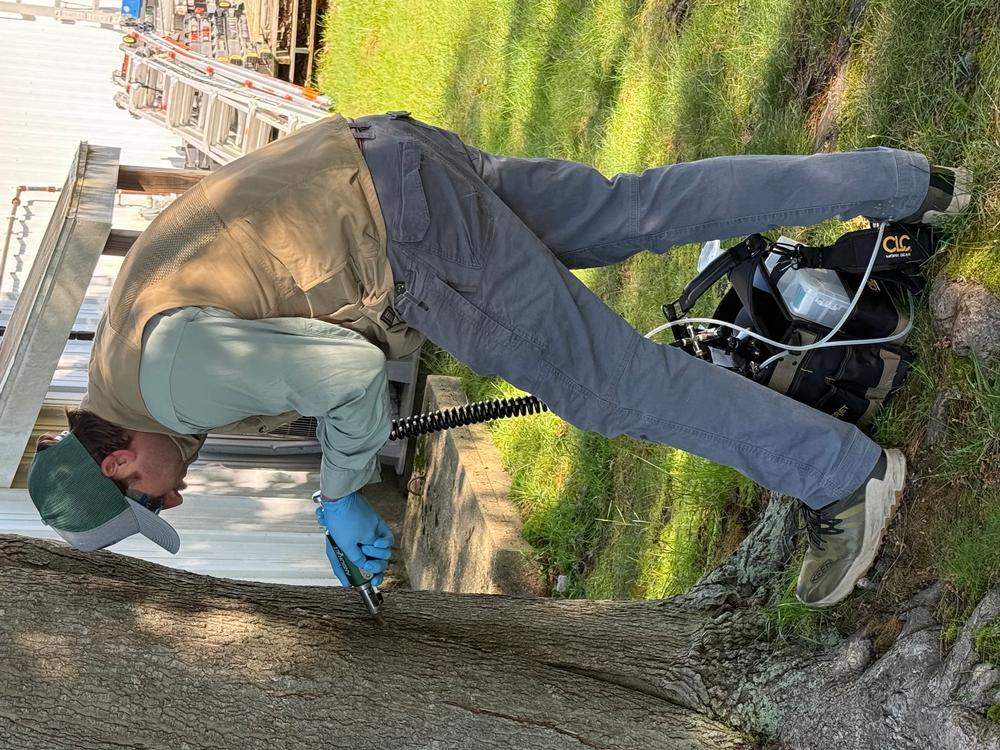
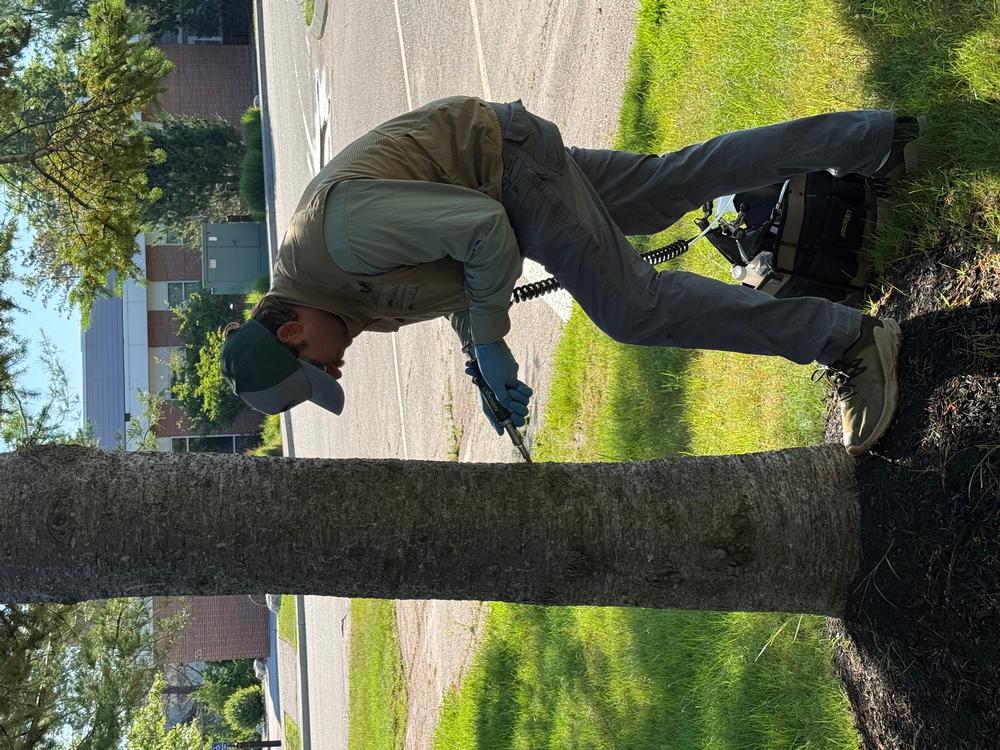
Tree Medics uses the Arborjet system for state-of-the-art tree treatments. We prefer injections over sprays because they are better for the environment and we see better long-term results. That said, there is a time and a place for a contact spray, and we always choose the safest, most effective approach for each tree.
How trunk injection works
- Assess and measureWe confirm the problem, identify the species and measure the trunk to set the right dose.
- Place small injection sitesSmall, precise sites are placed low on the trunk, in the tree’s active outer layer.
- Deliver the treatmentThe treatment is introduced directly into the tree’s vascular system.
- The tree does the restNatural water movement carries the treatment up through the trunk and into the canopy, right where insects feed.
Why we prefer injection
What we treat with injections
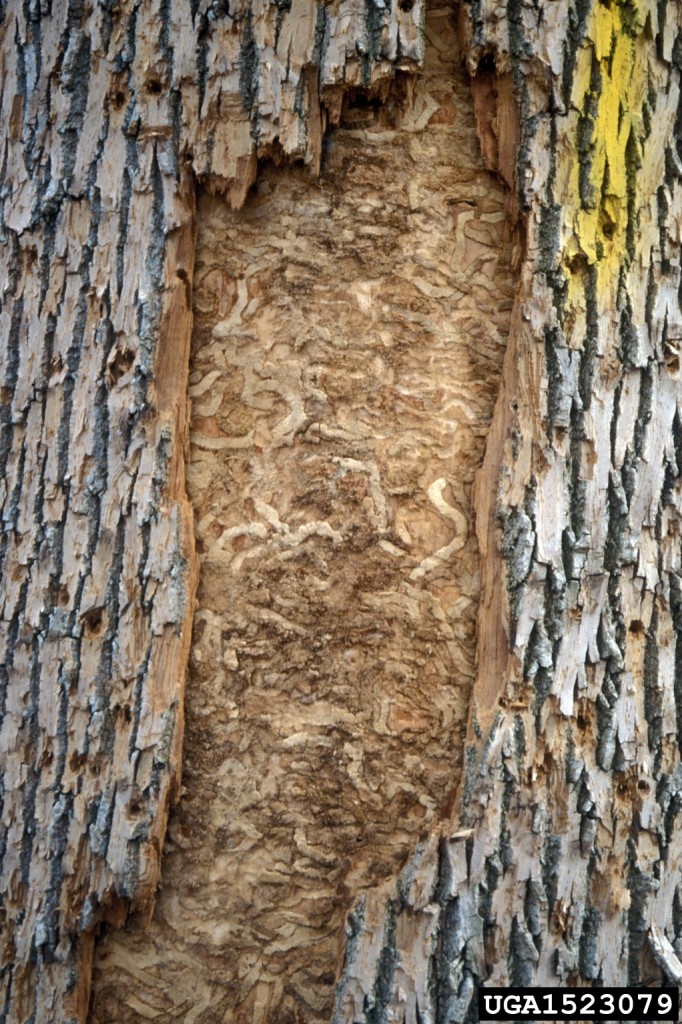
- Emerald ash borer
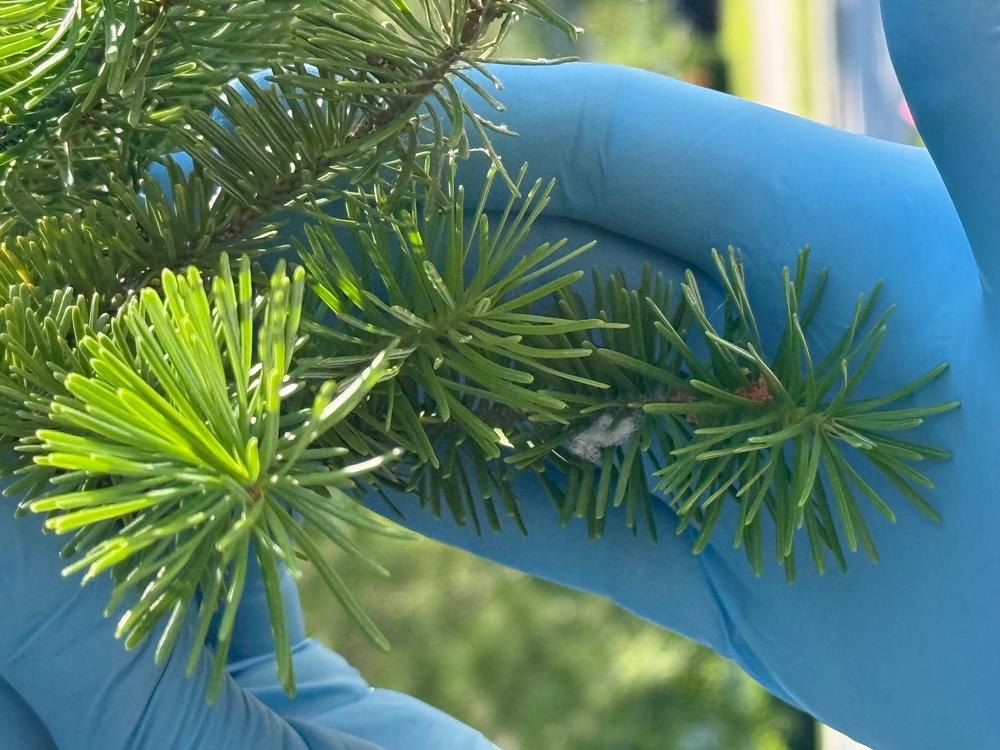
- Hemlock woolly adelgid
- Browntail moth
- Tree disease support
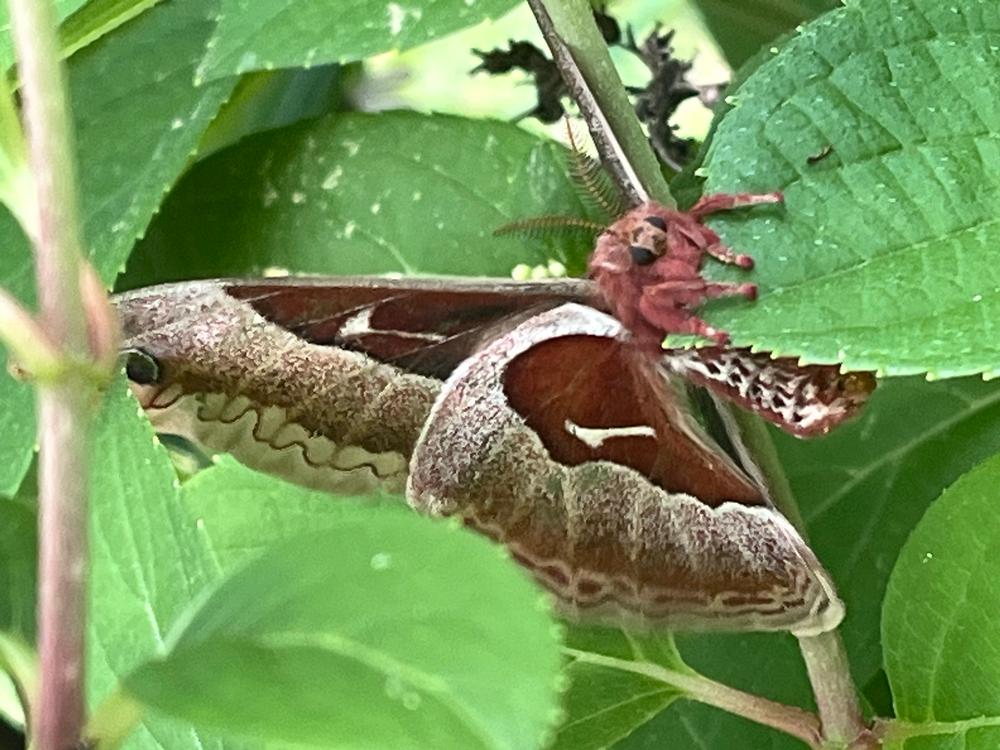
- Other leaf-feeding insects
- Stressed trees needing nutrients
Injections work best when a tree is in leaf and moving water well. We schedule treatments around each pest’s life cycle for the best result.
Injection, soil treatment or spray?
Injection is one of several ways to get a treatment into a tree. The right method depends on the pest, the tree and what is around it.
The honest trade-offs
Injection is a precise tool, not a cure-all. Extension specialists point out real drawbacks that every tree owner should know about:
- Each injection site leaves a small wound that the tree seals over but never fully heals, so old holes cannot be reused[1]
- Wounds can open the trunk to insects and decay fungi, which is why placement and spacing matter[1]
- Retreatment should wait until earlier wounds have closed[1]
- Injection makes sense when a tree is actually threatened: for emerald ash borer, extension guidance reserves it for healthy, well-structured ash once the beetle is nearby[1]
That is why we recommend an assessment before any injection: the product, dose and retreatment interval should match the tree, and some trees are not good candidates.
When injections are done
- Mid-May to early June: ash treesEmamectin benzoate trunk injections for emerald ash borer are timed for this window. One injection controlled the beetle for at least two years in studies.[5]
- Before late May: browntail mothIn most years, treatment should be effective before late May, while caterpillars are small.[6]
- April to October: hemlocksSoil-applied hemlock treatments can go on whenever the ground is thawed, and earlier in the season is better.[4]
Licensed for the work
In Maine, treating trees for pests and diseases for hire requires a commercial pesticide applicator license, and other paid tree work, including diagnosing tree problems, requires a licensed and insured arborist.[7] Tree Medics founder Erik Hanson is a licensed Master Applicator.
Send us a photo or book an assessment. We will tell you what is going on, whether treatment is worth it and which method fits.
Sources
- University of Nebraska–Lincoln Extension: Trunk injection pros and cons (February 2024)
- Maine Forest Service: Browntail moth frequently asked questions
- Maine Forest Service: Hemlock woolly adelgid fact sheet
- Michigan Invasive Species Program: Plan to treat trees for hemlock woolly adelgid (March 2026)
- Michigan State University Extension and partners: Insecticide options for protecting ash trees from emerald ash borer (E3075)
- Maine Forest Service: Browntail moth information
- Maine DACF Arborist Program: Hiring a licensed arborist