Hemlock woolly adelgid is a tiny, aphid-like insect from Asia that feeds on the sap of eastern hemlocks. Over several years, a heavy infestation can starve a hemlock of the stored energy it needs to grow, and the tree slowly declines. York County is entirely within Maine’s hemlock woolly adelgid quarantine.[1]
As of December 2024, the Maine Forest Service lists hemlock woolly adelgid as established in Biddeford, and says it is widespread along the southern coast.[2]
Signs of hemlock woolly adelgid
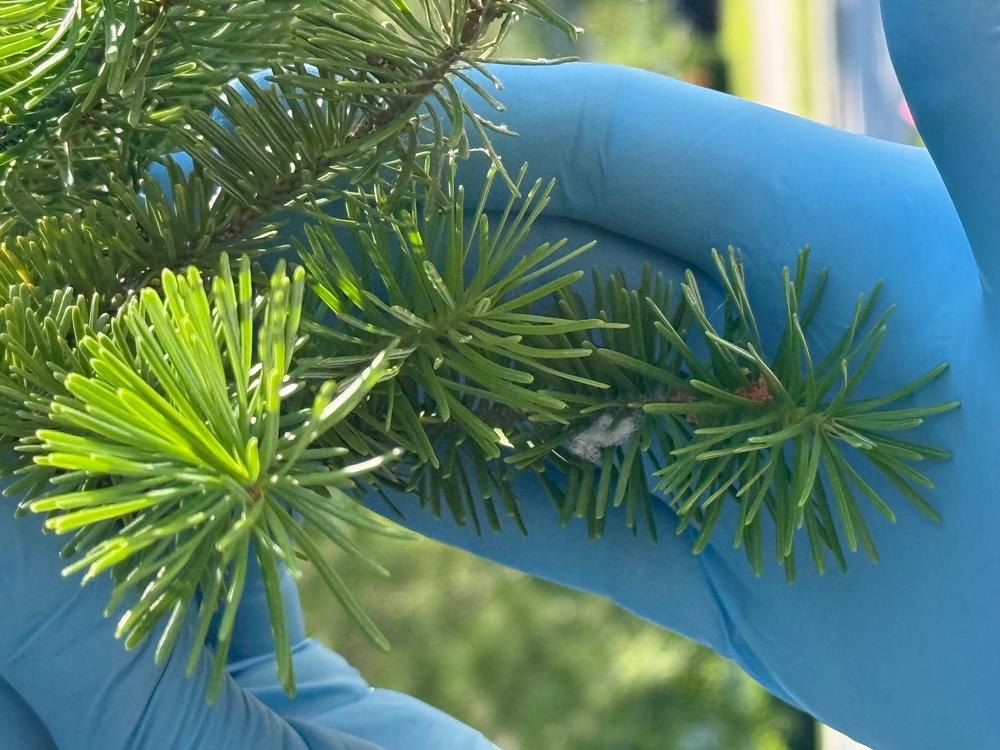
- Small white, cottony masses on the underside of young twigs, at the base of the needles
- Needles turning grayish instead of deep green
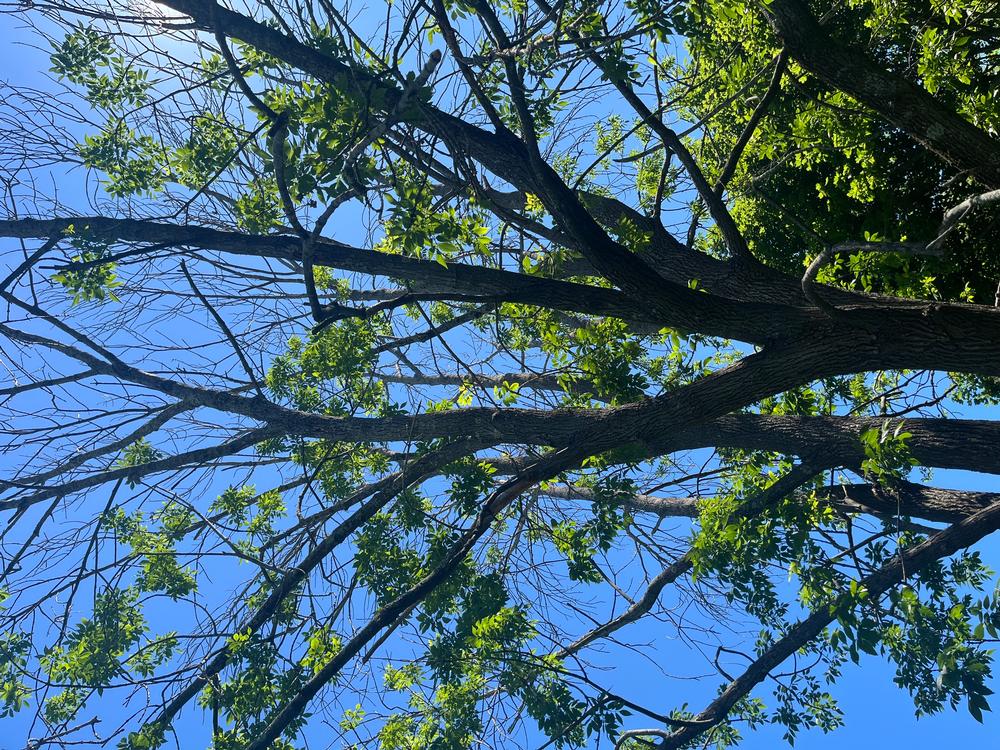
- Needle loss and thinning foliage
- Little or no new growth in spring
- Dieback that moves from the bottom of the tree upward
The Maine Forest Service suggests checking hemlocks twice a year, at the start and end of Daylight Saving Time.[3] If you see white wool on a hemlock in Biddeford, it is worth having the tree checked.
How we treat hemlocks in Biddeford
Systemic treatments rely on the tree to move them up into its branches. A hemlock with plenty of healthy foliage takes up treatment far better than one that is already in steep decline. Untreated infested hemlocks are likely to die within four to ten years.[4]
When to treat
- Early April to late OctoberSoil treatments can be applied whenever the ground is thawed, and earlier in the season is better.[4]
- Near waterWithin 75 feet of water, or where the water table is high, a trunk injection or bark treatment may be needed instead of a soil treatment.[4]
- Start and end of Daylight Saving TimeCheck hemlocks for white wool on the undersides of twigs.[3]
Want the full picture? Read our complete guide to hemlock woolly adelgid treatment in Southern Maine.
Hemlocks and woods in Biddeford
Hemlock Woolly Adelgid help near Biddeford
Tree Medics is based in Biddeford and works throughout Southern Maine. We also offer hemlock woolly adelgid services in nearby towns:
See all tree care in Biddeford.
Sources
- Maine DACF: Hemlock woolly adelgid quarantine counties and towns
- Maine Forest Service: Hemlock woolly adelgid overview and distribution
- Maine Forest Service: Hemlock woolly adelgid fact sheet
- Michigan Invasive Species Program: Plan to treat trees for hemlock woolly adelgid (2026)
- U.S. Census Bureau: QuickFacts, Biddeford city, Maine (2020 Census)
- Maine Audubon: East Point Audubon Sanctuary